As India processes the scale of the alleged ₹15.15 lakh crore revenue fraud at Rajesh Exports, a decade-old trail of tweets from Moneylife founder Debashis Basu has resurfaced, revealing that at least one observer had been raising red flags about the company since 2014, twelve years before SEBI finally acted.
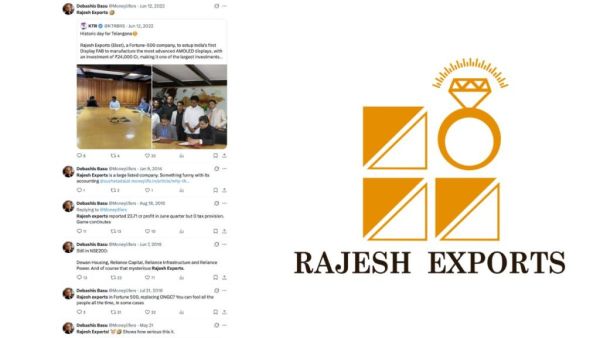
Basu, husband of legendary investigative financial journalist Sucheta Dalalposted his first flag on Rajesh Exports in January 2014, sharing a Moneylife article and writing simply that the company was large and listed but that “something is funny with its accounting.” That tweet, posted when most of the financial world considered the gold exporter a legitimate Fortune 500 success story, now reads as a prescient understatement.
The trail of public scepticism continued across years.
In June 2022, when then-Telangana minister KTR celebrated Rajesh Exports’ subsidiary Elest signing a ₹24,000 crore MoU to set up India’s first AMOLED display fabrication plant in Hyderabad, Basu responded with a single laughing emoji.
Now, in the aftermath of SEBI’s interim order, Basu has reflected on what drove his decade of scepticism.
What the smell test picked up that auditors missed
The irregularities that Basu flagged publicly, zero tax provisions on reported profits, Fortune 500 rankings driven by pass-through gold trading revenues that left minimal value behind, and accounting that simply did not feel right, were the same structural red flags that SEBI’s forensic auditors from BDO eventually confirmed after years of resistance from the company.
Rajesh Exports’ business model involved running enormous volumes of gold through its books, buying and selling the metal at thin margins, which artificially inflated the topline while generating modest actual profits.
The SEBI investigation, which ultimately found that 99.8% of consolidated revenues across FY21 to FY25 could not be substantiated, began only after a shareholder complaint in March 2024. By that point, LIC had built a 10.8% stake worth over ₹2,000 crore, 1.94 lakh retail investors held shares, and the company had been awarded a government PLI scheme allocation for EV battery manufacturing.
Basu’s decade of public scepticism, dismissed or ignored at the time, now stands as a case study in what the financial journalism community calls the smell test: the accumulated intuition that comes from years of reading balance sheets, watching corporate behaviour, and asking the simple question that institutional investors and regulators apparently did not ask loudly enough. Why does this not add up?
Disclaimer: This article is for informational purposes only and does not constitute investment advice. Please consult a qualified financial advisor before making any investment decisions.