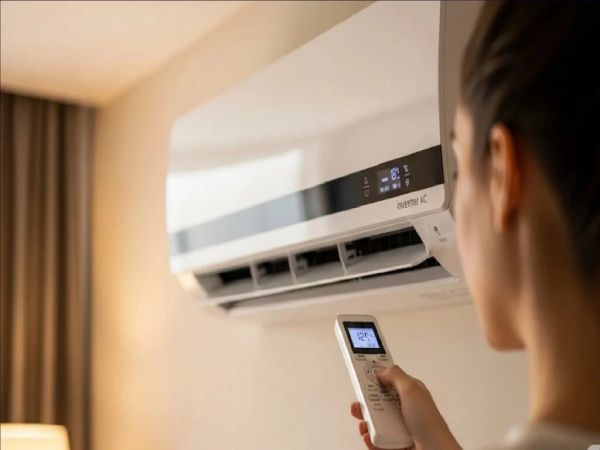
Friends, with the increase in temperature in May and June, the heat starts increasing, to avoid this, people use fans, coolers, ACs, of which air conditioners are the most popular option. While buying them, one thing is said almost everywhere: “Inverter ACs consume less electricity.” For this reason, many people spend more money on inverter models, thinking that their electricity bills will reduce significantly. But does this really happen, let us know the truth behind it-
In fact, electricity saving depends not only on the technology but also on how you use the AC. Before buying, it’s important to understand how inverter ACs work and whether they really suit your needs.
How does Inverter AC work?
In a normal (non-inverter) AC, the compressor works in a simple way—it switches on and off completely.
Inverter AC works differently. Its compressor runs continuously and automatically adjusts its speed according to the cooling requirement. Instead of switching on and off repeatedly, it keeps increasing and decreasing its speed to maintain a constant temperature.
Does inverter AC really reduce electricity bills?
Yes, but it is not a magical solution that will cut your electricity bill in half.
If you use your AC for long periods of time—typically 6 to 8 hours or more every day—an inverter AC can help reduce power consumption by about 20% to 40% compared to regular models.
However, the actual savings depend on several factors, such as:
Room size and insulation
temperature setting
weather outside
AC tonnage and capacity
energy star rating
Daily AC usage hours
If you use the AC for a short period of time, the difference in power consumption will not be enough to warrant the higher price.
Inverter AC vs Non-inverter AC: What’s the difference? inverter ac
starting price is higher
Provides better energy efficiency during long term use
Maintains a consistent room temperature
runs quietly
reduces pressure on the compressor
Non-inverter AC
purchase price is lower
Perfect for occasional or short term use
Compressor keeps turning on and off repeatedly
Typically consumes more power over time
For those who use their AC frequently, the savings in the long run can offset the higher initial cost of an inverter AC.
reduces pressure on the compressor
Non-inverter AC
purchase price is lower
Perfect for occasional or short term use
Compressor keeps turning on and off repeatedly
Typically consumes more power over time
For those who use their AC frequently, the savings in the long run can offset the higher initial cost of an inverter AC.